Dead Links Don't Dance: The Quiet Case for Archiving UK Mixes
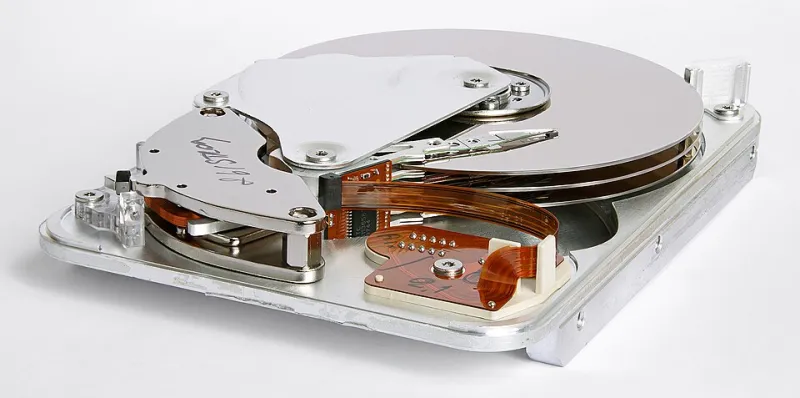
Photo: Eric Gaba (Sting - fr:Sting) This image was created with CombineZP by 11 ( It was created out of 11 single images.)., CC BY-SA 3.0, via Wikimedia Commons
There is a particular kind of disappointment that only lands at 11pm on a Friday. You remember a set. You remember exactly where you were when you first heard it — kitchen floor, headphones in, tea going cold — and you remember the fourth tune being an absolute monster. So you open the tab you've been hoarding since March, and the screen says the track is no longer available. No explanation. No forwarding address. Just a grey placeholder where two hours of somebody's life used to be.
If that has happened to you more than once this year, you're not unlucky. You're just early to a problem the UK scene has been politely ignoring for about a decade.
The tab you never got round to
Most of us treat saved tabs like a library card. We assume somebody, somewhere, is looking after the shelves. In reality, a huge chunk of the mixes we love live on borrowed land. A SoundCloud account goes quiet after a copyright strike. A Mixcloud page gets taken down when a selector steps away from the name they were using. A WeTransfer link shared in a group chat in February expires in March, and nobody notices because everyone meant to download it and nobody did.
There's a specific generation of UK mixes from the 2010s that is already half-mythology. You'll see people in forum threads describing a set in forensic detail — the opening acapella, the bit where the crowd loses it — and then admitting they haven't actually heard it in six years. It exists as a memory, a screenshot of a tracklist, and a dead URL. That's not an archive. That's a rumour.
The irony is that this is arguably the most-documented era of UK DJing ever. Every set gets filmed, every tracklist gets posted, every selector has a phone full of clips. And yet a set from 2014 that lived on a since-deleted account is more lost now than a bootleg tape from 1994 that somebody's uncle still has in a shoebox.
Platforms are landlords, not vaults
Here's the uncomfortable bit. Streaming and mix-hosting platforms are not archives. They're businesses with terms of service, licensing pressure and quarterly targets. That's not a criticism — it's just the arrangement. You get reach and a player that works on every phone; they get the right to change the rules whenever the lawyers get twitchy.
This is why the reliance on a single upload feels so fragile. A mix that only exists as one link on one platform is one moderation decision away from being nothing. And moderators don't know that the set at the end of that link was the one that got a thousand people through a grim winter. They see a file and a flag.
Larger institutions have started to clock this. Radio stations with proper archives, community stations with volunteers who actually label their folders, and the odd university library with a music collection worth the name — these are the closest thing the UK has to a proper safety net. But they can't cover everything, and they certainly can't cover the bedroom selector in Leeds whose best work is a 90-minute mix with 300 plays and no backup whatsoever.
The re-up etiquette nobody wrote down
Re-uploading is where this gets delicate, because a mix is not just a file. It's somebody's taste, somebody's bookings, somebody's name on a flyer.
The unwritten rule across most of the UK scene is simple enough: ask first, credit properly, and don't monetise. If the original selector is still around, a quick message — 'your set from [venue] is dead, do you mind if I put it back up with full credit?' — is almost always met with relief rather than annoyance. Most people are quietly gutted their work fell off the internet. Nobody wants to be the person who reposted a set against the artist's wishes, though, and nobody wants their mix used as background music for a crypto advert either.
If the selector has disappeared entirely, the etiquette shifts. Archival re-ups tend to go up unlisted, clearly labelled as a fan archive, with the original date, venue and tracklist preserved. No new branding, no 'presented by' prefix, no watermark. The point is to keep the thing alive, not to adopt it.
There's a parallel conversation about the tunes themselves, of course. Re-ups are not a licence to distribute other people's records, and the scene has become noticeably more careful about that in recent years. The sets that survive tend to be the ones handled with a bit of respect — the ones where everyone involved gets a namecheck and nobody gets a bill.
A small ritual worth adopting
If you want to stop losing sets, the fix is unglamorous and takes about four minutes.
Download the ones that matter. Not all of them — that's hoarding — but the ten or fifteen you'd genuinely be gutted to lose. Keep them on a drive that isn't the cloud account tied to your old university email. Rename the files properly, with the selector, the date and the room, because 'mix_final_v3.mp3' will be meaningless to you in three years.
Screenshot the tracklist while it's still there. Grab the artwork, too. A mix without its cover and its tracklist is a lot harder to identify six months later, and a lot easier to lose in a folder.
If you run a mix series, keep your own masters. Not just the uploaded version — the full-quality file, the artwork, the text description, the credit list. One folder per episode, one backup, done. The number of series that have quietly folded leaving nothing behind but broken embeds is genuinely sobering.
And if you're the person who found the dead link first, say something. A short post, a message to the selector, a note in the group chat. The whole reason this problem festers is that everyone assumes somebody else has a copy.
What actually goes missing
A dead link isn't just an inconvenience. It's a Warm-Up set from a Tuesday in a 150-capacity room that never got reviewed. It's a selector's first ever radio slot, recorded off a borrowed laptop. It's the mix that got somebody their first booking, or their first residency, or their first proper listen from a stranger in another city.
The UK scene is brilliant at celebrating the night itself. We are less good at the morning after. Preserving mixes is the morning after — tedious, unglamorous, and absolutely essential if the next generation is going to hear what we heard.
So open your saved tabs this week. See what's still there. Download the ones that aren't replaceable, and if a link is dead, be the person who asks about it. The sets that shaped your taste deserve better than a 404 and a vague memory.