Folder Discipline and Lucky Cables: The Unseen Prep Behind a UK Selector’s Set

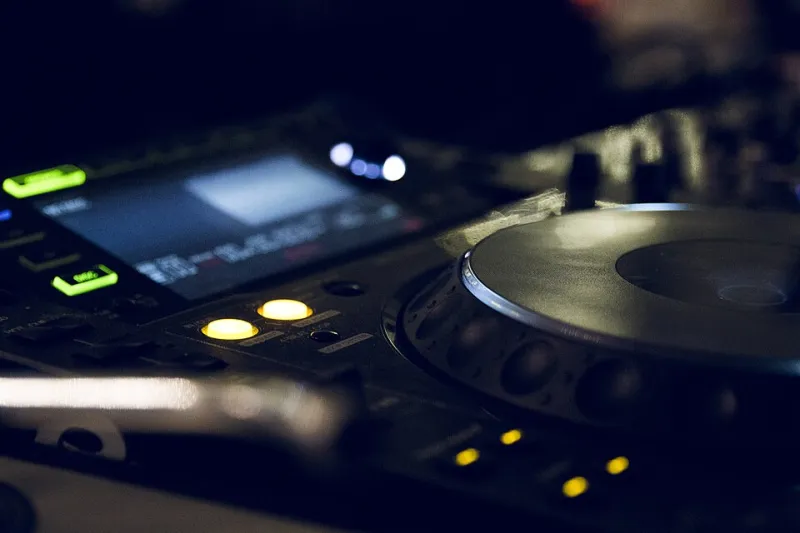
Photo: DJ preparing USB sticks and headphones in a dimly lit club booth before a set, close-up hands, moody lighting, via thumbs.dreamstime.com
There is a version of a DJ set that the crowd never sees. It happens in a dimly lit booth, on a train seat, or at a kitchen table the night before. It involves a USB stick, a laptop, a pair of headphones and a level of quiet concentration that looks nothing like the performance about to unfold. In the UK, where booth space is tight, soundchecks are short and the journey to the club can involve three trains and a bus replacement, this pre-flight routine has become its own craft.
The folder is the set
Ask a selector how they organise their USB and you will learn more about their approach than any bio. Some build sprawling trees: by mood, by tempo, by venue, by the hour of the night. Others keep one flat folder and trust their memory. A few maintain a sacred folder called something like current, which is emptied and rebuilt before every weekend. The folder is not admin. It is a map of how they think.
USB culture changed the way UK DJs prepare. When records were the format, the prep was physical: packing the bag, checking the needles, deciding what not to bring. Digital selectors now carry thousands of tracks, which sounds like freedom until you are stood in a booth with a CDJ that refuses to read a file you renamed in a hurry. Folder discipline is a response to that anxiety. If the structure is right, the set has a spine. If it is wrong, even a great tracklist can feel like a scramble.
The best pre-set rituals are boring on purpose. A selector will run through the first three tracks, check the key of the opener, confirm that the emergency folder is actually on the stick and not on the laptop at home. They will look at the booth, not the crowd, and work out where the USB ports are, which channel is free and whether the monitor is doing that thing where it sounds like a sock is over the speaker. Ten minutes of this can save an hour of winging it.
Emergency edits and the just-in-case folder
Every UK DJ has an emergency folder. It is the digital equivalent of the spare pair of socks. Inside, you will find the tracks that do a job: the acapella that can rescue a flat floor, the edit that turns a familiar vocal into something stranger, the ambient piece for when the room needs to breathe. The contents are deeply personal and often slightly embarrassing. Nobody builds an emergency folder out of coolness. They build it out of experience.
This is where the pre-set ritual gets interesting. A selector is not just choosing music; they are rehearsing contingencies. What happens if the crowd is younger than expected? What happens if the sound is too bright and the hi-hats are slicing through the room? What happens if the person before you plays the track you had planned as your closer? The emergency folder is a quiet admission that a set is a conversation, not a monologue. The prep is how you keep your end of it.
Cables, superstitions and the booth tax
The superstitions are real. There is the DJ who will not use the house USB cable, the one who has to check the left channel first, the one who refuses to share a tracklist before the set because it will jinx the flow. Some of this is practical: house cables go missing, booths get rearranged, monitors lie. Some of it is pure ritual. A lucky cable is not a technical solution, but it is a way of steadying the hands before the first cue.
Then there is the booth tax. In UK clubs, space is rarely generous. You arrive with a bag, a coat, headphones and a USB case, and you are expected to fold yourself into a corner while the previous DJ finishes. The ten minutes before a set are often spent negotiating that space as much as the music. A selector who knows the booth, or knows how to read a new one quickly, will settle faster. That settling is part of the set. It is the difference between a first track that lands and a first track that merely starts.
What the ritual tells you
A pre-set routine is a small window into a DJ’s personality. The archivist has a backup of the backup. The minimalist has six tracks and a plan. The chaos merchant has a stick that looks like a lost property box and somehow always finds the right tune. None of these approaches is inherently better. What matters is whether the ritual gives the selector enough confidence to listen properly once the music starts.
At CSS Mixes, we spend a lot of time with recorded sets, where the prep is invisible. You hear the blend, the arc, the payoff. You do not hear the folder check or the moment someone realises their emergency edit is in the wrong format. But those moments shape what reaches the speakers. The most telling part of a UK set may not be the drop, the mix or the final track. It may be the quiet ten minutes before anyone hits play.