Forty-Five a Side: The Cassette Logic Creeping Back Into UK Mixes
Somewhere in the last twelve months, a quiet structure started showing up in UK mix links. Not one file with a three-hour runtime and a warning to settle in, but two: a 45-minute Side A and a 45-minute Side B. The selector hasn't lost the plot. They've found a midpoint.
It sounds like a small thing. It isn't. A single long file asks you to decide when to stop. A two-sided mix makes that decision for you, then hands you a small ritual: the fade, the pause, the flip. In 2026, with more mixes than ever chasing fewer ears, that bit of architecture is doing a lot of heavy lifting.
The problem with one very long file
Streaming didn't kill the long mix. It just made it feel endless. A three-hour set can sit in a browser tab for weeks, half-listened, skipped through, abandoned at the 70-minute mark when the room changes or the train pulls in. The DJ never knows where the drop-off happened. The listener never gets the payoff.
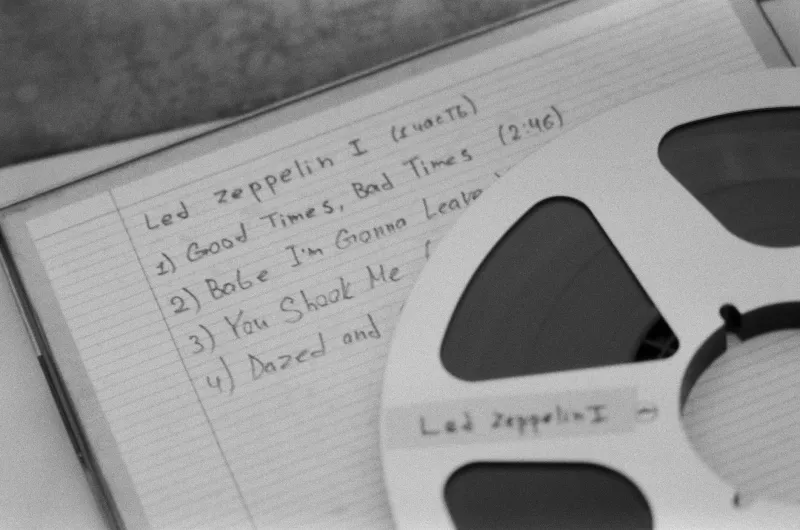
A 90-minute cassette had a built-in truth: you could only hear so much before you had to do something. Side A ended. You flipped. Side B began. That forced break was never a limitation worth mourning — it was a shape. And shape is exactly what a lot of UK mixes are missing right now.
What a C90 actually taught us
Anyone who grew up dubbing tapes for the car knows the grammar. You front-loaded Side A with the tunes that had to be heard immediately. You saved something weird or tender for the back half. You left a few seconds of run-off because the tape deck would otherwise chew the final chorus. You thought about the flip.
The C90 wasn't a random length. It was roughly 45 minutes a side, which is about the length of a good commute, a long bath, a slow cook, or the walk from the station to the club. It fitted real life. And crucially, it ended. You knew when it was over because the tape ran out with a soft clunk.
Digital mixes have no clunk. They just keep going until the file stops, and by then most listeners have drifted. The cassette shape brings the clunk back without the hiss.
The midpoint as a creative decision
A handful of UK selectors are now building mixes with an explicit midpoint, and the results are noticeably different. Side A tends to carry the argument — the big moves, the obvious heat, the tunes that make sense on first listen. Side B gets to stretch: the dubbier stuff, the odd edit, the track that needs eight minutes to unfold.
That division does something useful. It stops a mix from becoming a flat conveyor belt of good records. It gives the selector a place to hide a favourite that wouldn't survive the opening ten minutes. It also gives the listener a reason to come back for the second half rather than treating the whole thing as background.
One selector I spoke to described it as 'a interval you can hear'. Not a break in the music, but a break in the attention. Side A ends on a question. Side B answers it, or ignores it, or changes the subject. Either way, you notice the join.
Flip, breathe, reset
The side-flip also solves a practical problem: the 90-minute mix is too long for a single sitting but too short to commit to as an event. Splitting it gives people permission to listen in two goes. On a Northern line train, on a lunch break, on the drive back from a gig. It respects the fact that nobody's day has a three-hour hole in it.
And there's a social layer. A two-part mix is easier to share. You can send Side A to one friend and Side B to another. You can post the flip moment as a clip. You can argue about which side is stronger — a debate that never happens with a single unbroken file because nobody remembers where they were.
The cassette shape also nudges selectors towards a deliberate ending. A 45-minute side has to land somewhere. You can't just fade out at minute 88 and hope for the best. You have to choose a last tune, let it breathe, and stop. That sounds obvious. In practice, it's a discipline that a lot of long mixes have lost.
Not nostalgia — architecture
It would be easy to file this under tape revival, alongside the cassette reissues and the Walkman tattoos. But the selectors doing it aren't trying to recreate the 1980s. They're using the cassette's constraints because constraints are useful. A forced midpoint is a creative prompt. A fixed side length is a deadline. A flip is a scene change.
The best recent examples don't sound retro at all. They sound like modern UK mixes that happen to have been built with an old shape in mind. The tunes are current. The blends are clean. The only old-fashioned thing is the respect for a clean break.
How to build one without a tape deck
You don't need hardware. Pick a natural halfway point and treat it as a hard stop. Record Side A in one pass, ending on something that feels like a full stop or a comma. Then start Side B somewhere else entirely — different tempo, different mood, different room. Label the files clearly. Put the running order in the description. Tell people when to flip.
The trick is to resist the urge to make both sides the same. Side A should be able to stand alone. Side B should feel like a reward for coming back. If you get that right, the midpoint stops being an arbitrary cut and becomes the reason the mix works.
A 90-minute mix with a forced flip is not better than a 90-minute mix without one. But it is more intentional. And in a year when every feed is shouting for attention, intentional is a sound worth chasing.