Three Minutes to Booked: The Real Rules of the UK Demo Mix

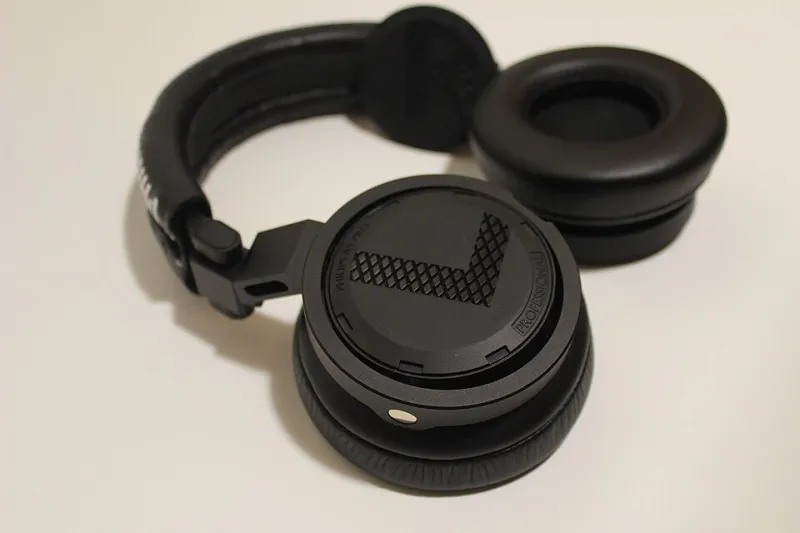
Photo: JasonCarswell, CC BY-SA 4.0, via Wikimedia Commons
Ask a UK promoter what their inbox looks like on a Tuesday and you'll get a weary laugh. Forty links, eleven DMs, four follow-ups from someone whose cousin runs a bar in Peckham. The demo mix has never been easier to make and never been harder to get heard. So what actually happens when a booker presses play?
We spoke to people who do the listening for a living — residents, bookers and one long-suffering promoter who runs a 300-cap room in Leeds — to find out what a twenty-minute audition is really up against.
The three-minute verdict
“I give it three minutes,” says Mara Okafor, who programmes Friday nights at a mid-sized venue in Leeds. “Not because I'm cruel. Because if the first three minutes don't tell me who you are, I'm not going to find out at minute fourteen.”
That number came up again and again. Not fifteen minutes, not the full runtime — three. Long enough to hear a selection, a tempo, a bit of personality. Short enough that a booker can get through twelve links between soundcheck and doors.
What they're listening for isn't technical perfection. It's identity. A demo that sounds like a photocopy of last month's big room mix is dead in the water, however clean the transitions. “I can teach someone to beatmatch in a fortnight,” says Dev Patel, a resident at a Bristol club night. “I can't teach them taste.”
Skip, scroll, replay
Here's the bit most selectors don't want to hear: a lot of bookers don't start at the beginning.
Okafor admits she often jumps to the two-minute mark first, then decides whether to go back. Another promoter in Manchester says he opens the waveform, looks for the biggest gap in energy, and checks whether the mix survives its own quiet section. If it only works loud, he assumes it only works loud.
But the people who get booked tend to earn a second listen, not just a first. The difference is usually obvious within a minute — a confident opening, a tempo that doesn't apologise for itself, and at least one moment where the selector clearly wasn't chasing the obvious tune.
Twenty minutes is a shape, not a limit
The twenty-minute demo has become the standard for a reason: it fits a school run, a commute, a fag break outside the venue. But the length isn't the point — the shape is. Promoters describe listening for an arc in miniature: a clear opening statement, a turn somewhere around the ten-minute mark, and an ending that feels chosen rather than merely reached.
“I want to hear that you know how to take a room somewhere,” says Ellie Fraser, who books a monthly in Glasgow. “Even if the room is my kitchen at eight in the morning.”
What kills the shape is padding. Six minutes of looped intro to prove your patience, three tracks that all do the same job, a final ten minutes that coast because the selector ran out of ideas at track nine. Twenty minutes is not a lot of room to hide — which is exactly why it works.
The tracklist is doing the interview
A surprising number of demos still arrive with nothing attached but a SoundCloud link and an emoji. That's a wasted opportunity, and every booker we spoke to said the same thing: the tracklist is half the submission.
Not because they're checking your IDs against Discogs — though some are — but because a well-kept list shows curation. Where you dug, what you left out, whether you've got a point of view. A selector who annotates two or three tracks with a line about why they matter reads as someone who thinks about sets, not just blends.
“If there's no tracklist, I assume there's a reason,” Patel says. “And the reason is usually that half of it is Beatport top ten.”
Room awareness beats flashy technique
The technical arms race of the last few years has produced a lot of very skilled demos that don't get booked. Double drops, triple-deck trickery, edits that take a fortnight to build — impressive in a bedroom, irrelevant at 11pm in a room with a low ceiling and a crowd that's still arriving.
What promoters actually want to hear is judgement. Do you know what a warm-up sounds like? Can you imagine the last train home and the people who are still standing when it goes? A demo that sounds like a headline set submitted for a 10pm slot is a common and quietly fatal mistake.
One booker in south London put it neatly: “Play the room you want, not the room you're in. But know the difference.”
Errors that end the listen
Asked for the things that get a mix switched off, the answers came quickly and with feeling. Opening with your biggest tune — no context, no build, just a bang and then nowhere to go. Clipping the master because you wanted it loud. Recording in one take with a dodgy cable and calling it raw. Sending a two-hour live set when the brief asked for twenty minutes. Forgetting to include a way to contact you. Spelling the venue wrong in the message, which suggests you've not read the brief at all.
The one that stings most? A demo that could have been made by anyone. If a booker can't describe your sound to a colleague in one sentence, they can't put you on a flyer.
What to send with the link
Keep it short. Twenty minutes of audio, a clean tracklist with timestamps, one paragraph about who you are and what you play, and a link that isn't buried behind a login. If there's a moment you're proud of, flag it — bookers like a nudge. If you recorded it at home, say so; nobody's expecting a studio.
And then leave it. The follow-up email three days later, then four days after that, does more damage than silence.
The takeaway
A demo mix isn't a portfolio, it's an argument. Twenty minutes to convince a stranger that you belong in their room on a specific night, in front of a specific crowd. The selectors who get booked aren't always the most technical, but they're almost always the clearest — about who they are, and who they're playing for. Three minutes is all it takes to show that. The rest is just finishing the sentence.