ID, Please: The Unwritten Code of Chasing a Tune in a UK Booth

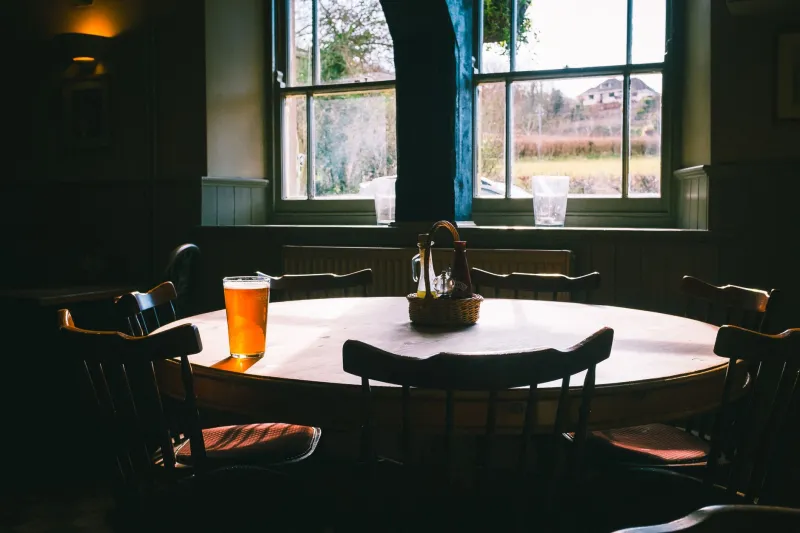
Photo by Photo by Edoardo Cuoghi on Unsplash on Unsplash
There's a moment that happens in every UK club, usually somewhere between the second hour and the point where the room stops pretending it's not fully locked in. Someone leans across the booth, phone already lit, and mouths a question. The DJ either smiles and leans in, or smiles and does not lean in at all. Nothing about the music changes. Everything about the next thirty seconds does.
Chasing a track ID is one of the smallest rituals in dance music and one of the most revealing. It tells you how a selector sees their own records, how a crowd sees its own access, and how much of a scene now lives in the gap between hearing something and owning it.
The hand through the booth
The mid-set request is the classic, and it's also the one most likely to go wrong. The physical problem is obvious: the DJ is working. There are two decks, a queue of tunes in their head, a cue that's about to run out and a mixer with more lights on it than a Christmas tree. A phone shoved into that space is not a question so much as an interruption with a screen.
And yet it works more often than you'd think. Plenty of UK selectors will happily squint at a note app, nod, and mouth something back. Some will turn the record sleeve around. Others have a laminated card, a whiteboard, or a permanently open notes app on the booth ledge — small bits of infrastructure built purely to head off the question before it arrives.
What ruins it is the assumption of entitlement. The hovering. The third tap on the shoulder. The phone held up in the middle of a blend, screen brightness at maximum, as if the ID is owed rather than asked for.
Shazam has changed the question
A decade ago, the phone was the last resort. Now it's the first instinct, and the result is usually the same: nothing, or worse, the wrong thing entirely.
Any selector who plays edits, bootlegs, reworks, pitched-up white labels or dubs cut for three or four people will tell you that the little purple app has a blind spot the size of a warehouse. Shazam will confidently identify a 2011 house record as something with a similar vocal three semitones away. It will fail on anything unreleased. It will fail on the thing you actually want, which is why you're now in the booth asking a human being instead.
The upside is that Shazam culture has made crowds sharper. People arrive with an ear already half-tuned for identifying a sample, a vocal, a loop. The downside is a certain impatience — a sense that every tune should be resolvable within four seconds, and that a DJ withholding the answer is being difficult rather than doing their job.
When the tune has no name
This is where the etiquette gets genuinely complicated. Some records simply can't be handed over. A dubplate is a physical object with a run of one. An unreleased edit might be someone's Christmas release, or their entire marketing plan. A white label with a stamped sleeve might be the only copy in the country that night, and the selector's whole booking rests on being the person who has it.
Guard the ID and you look precious. Give it away and you've spent a bit of your own currency, sometimes on behalf of an artist who never agreed to it.
Most of the selectors who keep quiet are not doing it to be mysterious. They're doing it because they've been asked to, or because the record hasn't come out yet, or — the quieter reason — because the ten-minute window where the room doesn't know what it's hearing is part of the experience. Naming everything is a bit like reading out the plot of a film halfway through.
The DM is the new shout
The most underrated development in UK mix culture is that the post-set message has largely replaced the booth interrogation. It's calmer, it's more accurate, and it gives the DJ a chance to answer on their own terms.
Instagram DMs are the standard. X still works for some scenes, and there are corners of the internet — Discogs forums, Reddit threads, the comments under a Boiler Room upload — where the crowd does the detective work itself. WhatsApp groups trade IDs like trading cards. There's real lore in this: the unspecified edit that three people in Leeds have and four people in Bristol have been chasing since spring.
The etiquette is simple enough. Say where you saw them. Say roughly when in the set. Be specific about which tune — a timestamp, a lyric, the vocal sample. Don't send seven messages. Don't ask them to reveal something they've just declined to reveal in person. And if they answer with a shrug emoji, that is an answer.
A workable code of conduct
- Wait for the gap. Between tracks, not during a blend. The five seconds after a mix is a hundred times better than the four minutes before it.
- One question, one tune. Not five IDs. Not a list.
- Have your phone ready but not in their face. A screen is not a conversation.
- Ask about the tune, not the file. 'What was that?' lands better than 'Have you got that?'
- Take a no gracefully. If it's a dub, a pre-release or a guarded edit, the no is not personal.
- Try the label before the DJ. A lot of IDs are one Bandcamp search away once you've got the artist name.
- If you do get the ID, buy the tune. Especially the small ones. That's the whole transaction, really.
After the last record
There's a version of this culture that's purely transactional — a crowd extracting data, a DJ defending it. That's not what most nights look like. In practice, the ID exchange is one of the few bits of genuine contact between a booth and a dancefloor, a tiny negotiation over something nobody can own but everybody wants.
The selectors worth following are the ones who understand that a track ID is a gift with a cost, and the crowd members worth being stood next to are the ones who understand it's a gift at all. Ask nicely, once, at the right moment. Then go and dance, and let the tune stay a mystery for a bit longer.