Needle Drop Economics: Inside the UK's Vinyl-Only Booking Boom

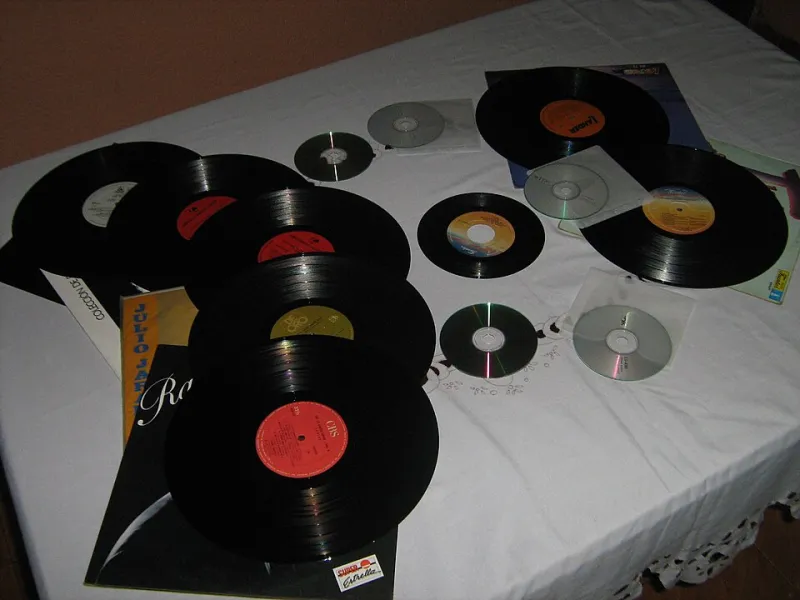
Photo: VideoArchaeologist, CC BY-SA 4.0, via Wikimedia Commons
Ask a promoter what's in the booking contract this year and the answer is increasingly mundane: fee, set time, rider, and a line that would have raised eyebrows in 2019 — vinyl only, no exceptions.
The clause has quietly moved from gimmick to policy. It's no longer just the crusty night in a railway arch with a hand-painted sign. It's the 180-cap basement in Leeds, the Sunday terrace session in Bristol, the warehouse party in Manchester's outer ring, and — more tellingly — the second stage at festivals that could book literally anyone and have decided to book someone with two flight cases and a bad back.
The clause nobody used to read
'It started as a bit of a joke on the poster,' says Marta Okonjo, who books a monthly in a 180-cap room off Kirkstall Road. 'Then we realised the nights where we'd said vinyl only were the ones people talked about afterwards. Not because of the format, but because the DJs played differently. They'd brought records they actually loved instead of a USB with 4,000 tracks and a search bar.'
That's the argument you hear most often, and it's less romantic than it sounds. Vinyl-only isn't a moral position on sound quality for most bookers — it's a behavioural hack. No waveform, no key tags, no scrolling. You play what's in the box, which means you play like someone who had to carry it up two flights of stairs.
What it actually costs to say yes
Here's the unglamorous bit. A two-hour vinyl set is roughly 40–60 records for a comfortable selector, and a full night's worth of options can push past 150. That's a suitcase, a shoulder bag and a checked bag on the way to Glasgow. EasyJet does not care about your artistic integrity.
Then there's the kit. Venues that advertise vinyl-only nights need decks that are actually maintained — not the pair behind the bar with a bent stylus and a ground hum nobody has fixed since the smoking ban. Several promoters we spoke to now budget for a technician on the night, or at minimum a spare pair of carts and a headshell in the booth.
'A stylus is thirty to eighty quid and it dies when someone reverse-cues badly at 3am,' says Dean Yarwood, who runs sound for a mid-sized venue in Sheffield. 'If you're running a vinyl-only policy every month, you're replacing something constantly. That cost lands on the promoter, not the DJ, and it's the reason a lot of nights quietly abandon the idea after three events.'
The floor is wobbling, and so is the needle
Structural engineering is the recurring villain of this story. Old UK venues were not built for 300 people bouncing in time, and a suspended wooden floor flexes. A flexing floor plus a turntable plus a bass bin equals a needle skating across a £60 record.
Bookers have developed workarounds: isolation feet, paving slabs under the decks, moving the booth off the sprung section. One Bristol promoter describes taping a spirit level to the plinth as 'the single most useful thing we've done in five years of running parties.'
The audience, meanwhile, mostly doesn't notice any of this. What they notice is the selection. Several DJs said the same thing in different words: a vinyl-only crowd is not more knowledgeable, but they are more patient. They'll let a track breathe because they can see there's a physical reason the next one isn't instant.
The access problem nobody wants to talk about
There's a fair criticism in the mix, and it comes up whenever this topic is raised in group chats. A vinyl-only policy is a filter, and filters have a demographic. Records are expensive. Postage from the US is brutal. Knowing which charity shops in which towns are worth checking is a kind of cultural capital you inherit rather than learn.
Sensible promoters have started pairing the clause with a shared crate — a box of doubles the residents bring so guests can play without shipping their whole collection. Others run a records-in-the-back-room table so younger selectors can build a bag on the night. 'If the only people who can play your vinyl night are 45-year-old men with a Discogs shop,' one Manchester booker says, 'you haven't built a scene. You've built a reunion.'
So is it sustainable?
As a permanent, universal policy, no. Most rooms in the UK can't afford the maintenance, and plenty of brilliant DJs simply don't collect. As a periodic format — the first Friday of the month, the all-dayer, the festival stage with a proper spec sheet — it's thriving, and it's doing something the digital booth can't: it slows the night down by about ten per cent, and ten per cent is often the difference between a good set and one people quote back to you a year later.
The clause isn't nostalgia. It's a constraint, and constraints make people interesting. Just budget for the styluses.