You Can Hear the Queue: Why Raw Booth Recordings Are Back on UK Feeds
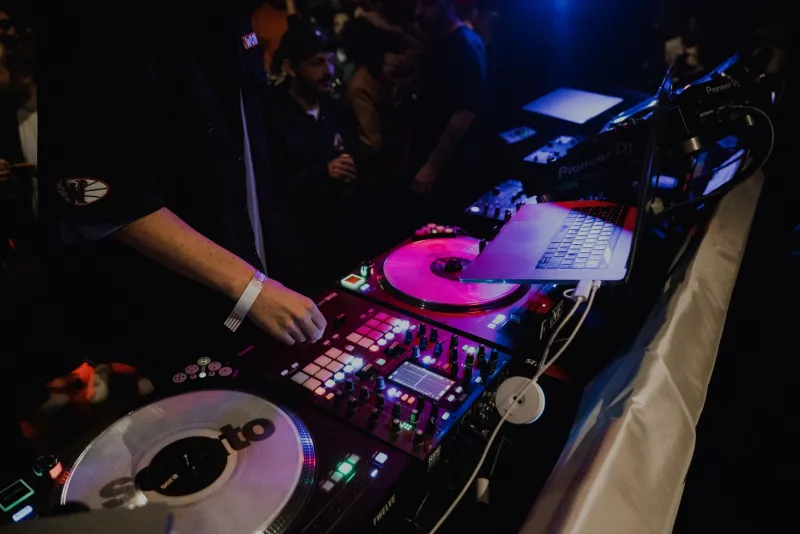
There’s a moment on a recent live recording from a small room in Peckham where you can hear someone ask their mate to move, a glass hit the bar, and the selector laugh before dropping the next tune. It is not the kind of detail you’d leave in a studio mix. That’s exactly why it’s there.
In 2026, a growing number of UK DJs are putting out booth recordings rather than clean re-records: sets captured live, often straight from the mixer or a phone balanced on a flight case, with the crowd, the cues and the occasional clanger left intact. The move runs against years of polish, where the upload was expected to sound like the best possible version of the night rather than the night itself.
The Clean Mix Has a Credibility Problem
Streaming has made every selector a publisher. A tidy 60-minute mix with a careful tracklist can travel further than the club night that inspired it. But the more perfect the upload, the harder it is to know what it actually represents. Was that transition rehearsed in a bedroom? Was the crowd noise added afterwards? Did the set ever happen in front of anyone?
Raw booth recordings answer those questions by refusing to hide the evidence. You hear the room filling up. You hear the monitor squeal. You hear the selector miss a cue and recover without stopping. For listeners who follow UK mix culture closely, that messy middle is becoming more valuable than a flawless hour of blends.
What Room Noise Actually Proves
A live capture is not automatically good. But it does carry a kind of proof. It shows how a DJ reads a room in real time: when they pull back, when they push forward, how they handle a request, what they do when the energy dips. Those decisions are the job. A studio mix can demonstrate taste and technique, but a booth recording demonstrates judgement under pressure.
That matters in a UK scene where the gap between a good selector and a good producer is often the whole point. The crowd chatter, the MC interruption, the sound of a door opening at the wrong moment — these aren’t distractions. They’re context. They tell you the set was made for a specific night, not a generic playlist slot.
The Booth Recording as a Calling Card
For emerging DJs, the raw set has become a practical calling card. A promoter can hear how you handle a half-full room at 11pm, not just how you sound after three hours of editing. A listener can hear whether your selections hold up when the crowd isn’t yet onside. A booker can hear whether you panic when the mixer clips.
That’s particularly true outside London, where a recording from a Leeds basement or a Glasgow back room can travel further than the night itself. The room noise becomes part of the identity. It says: this happened here, with these people, on this soundsystem. In a feed full of interchangeable studio mixes, that specificity stands out.
Not an Excuse for Sloppiness
There’s a difference between a raw recording and a careless one. Leaving in a cue stumble is honest. Leaving in a set that never found its footing is just a bad listen. The selectors doing this well are still making an edit of sorts — they’re choosing which night to share, where to start, where to stop, and whether the recording is strong enough to represent them.
The best raw sets also tend to come with a little scaffolding: a date, a venue, a tracklist, a note about the room. The point isn’t to abandon craft. It’s to stop pretending craft only exists when everything is clean.
How to Listen to a Raw Set
Start with the first ten minutes. Does the selector settle into the room, or do they force it? Listen for how they use the space between tunes. A good live recording will show you the pace of the night, not just the pace of the mix. And pay attention to the interruptions — a crowd chant, a rewind, a mic moment — because those are often where the real character of the set lives.
At CSS Mixes, that’s the appeal of the current crop. They sit somewhere between a mix and a field recording. They’re not trying to be timeless. They’re trying to be true.
The Risk of Nostalgia
There’s a nostalgia trap here. Raw recordings aren’t inherently more authentic than polished ones, and not every crowd noise needs preserving. The trend could tip into a kind of performative grit, where every upload has to include a pint glass clink to prove it’s real.
But the swing back to live captures feels less like a rejection of Studio DJ and more like a correction. After years of mixes that sounded like they were made for a brand deck, listeners want the sweat again. They want to hear the selector think. They want the room.
Where It Leaves the Studio Mix
The clean mix isn’t going anywhere. It still has a job: showing a selector’s palette, archiving a sound, making a set portable. But the raw booth recording is doing something different. It’s a document of a night, with all the fragility that implies.
For UK mix culture in 2026, that fragility is the selling point. You can hear the queue at the door. You can hear the monitor crackle. You can hear the moment the room turns. And if a selector is brave enough to leave that in, you’re hearing something closer to the truth than any polished re-record can offer.